ACP vs Acrylic Signage: Which Material Lasts Longer Outdoors?
Shree Print Centre production team · Last updated
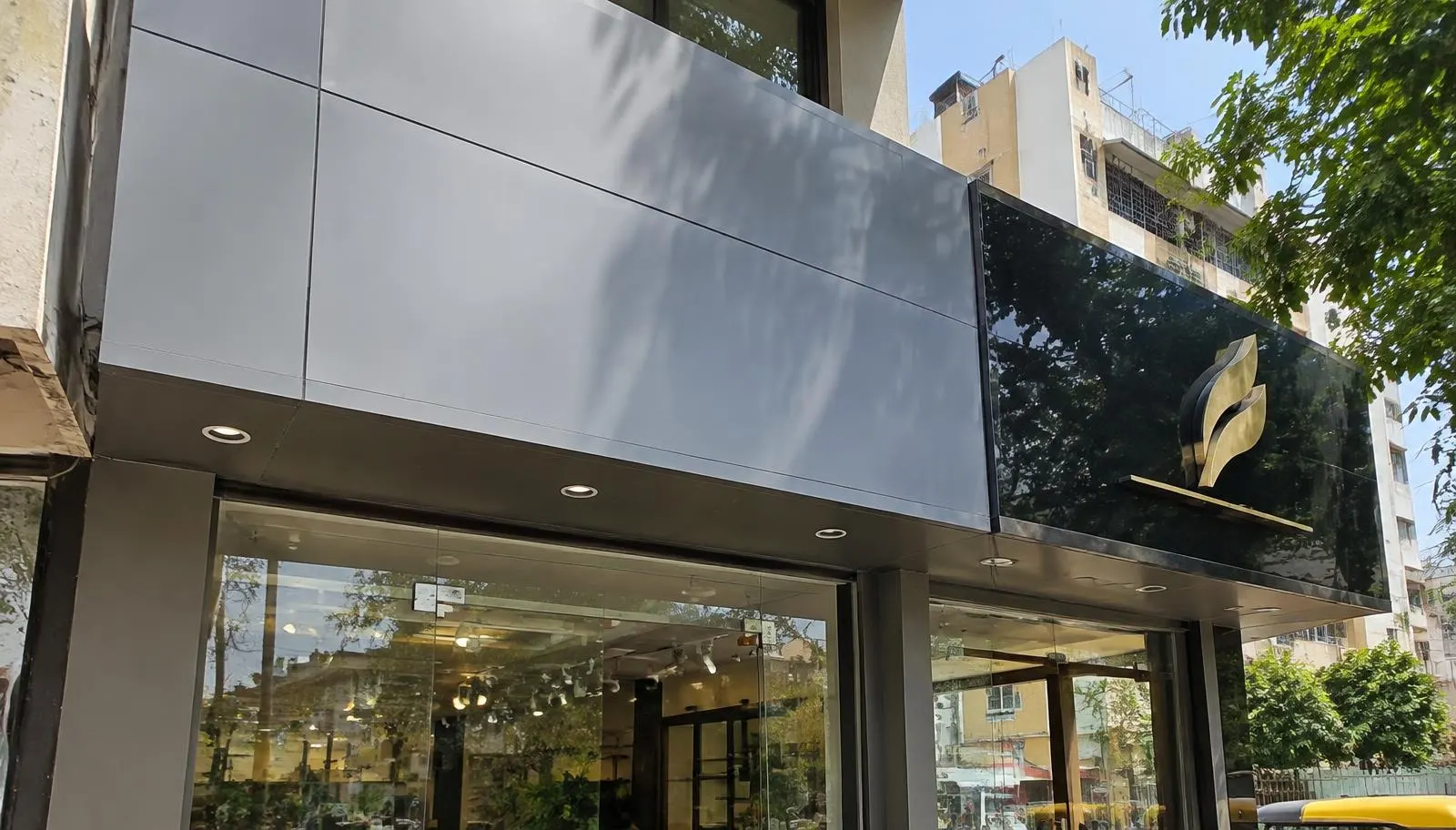
AI-generated illustration — not a completed Shree Print Centre project.
Quick answer
ACP is generally the tougher, more impact-tolerant choice for large outdoor boards and cladding, while acrylic gives a clearer, more polished finish and works well for lit signs and smaller features when it is a UV-stable grade and mounted correctly. Neither lasts a fixed number of years: lifespan depends on the grade, the finish, the mounting and how exposed the sign is.
Get My Free QuoteOutdoor signs face sun, rain, dust and heat every day, so the material you choose decides whether your board still looks sharp after a few seasons. ACP and acrylic are two of the most common choices for shop signage. They behave differently outdoors, and the right one depends on the sign, its position and your budget.
What Is ACP Signage?
ACP stands for aluminium composite panel: two thin aluminium sheets bonded to a core material. The result is a flat, rigid, lightweight panel that resists bending and is widely used for shopfront boards and building cladding. You can read more in this overview of aluminium composite panels.
Where it works best: large exterior boards, fascia panels, building-facing signs and any sign that needs a flat, clean, durable surface.
Worth knowing: panels are made with different core types. If the sign will be fixed to a building, ask about the core and whether a fire-retardant grade is appropriate or required.
What Is Acrylic Signage?
Acrylic is a rigid plastic sheet (PMMA) known for optical clarity and a polished finish. It can be clear, coloured or frosted, and it is easy to cut into letters and shapes. See this overview of acrylic (PMMA) for the material background.
Where it works best: illuminated glow boards, reception and interior signs, raised letters and premium logo panels.
Worth knowing: acrylic can scratch more easily than aluminium and can crack under a hard impact. Outdoors, use a UV-stable grade, and allow for expansion and contraction with temperature when it is mounted.
ACP vs Acrylic: Key Differences at a Glance
| Factor | ACP | Acrylic |
|---|---|---|
| Structure | Aluminium sheets over a core | Solid plastic sheet |
| Look | Flat, clean, matte or gloss painted finish | Polished, glossy, can be clear or coloured |
| Impact tolerance | Generally good | Can crack or scratch under hard impact |
| Weather resistance | Strong when properly finished and mounted | Strong in UV-stable grades with correct mounting |
| Lighting | Not translucent, so used with printed or applied faces | Can be lit from behind or edge-lit |
| Best for | Large fascia boards, cladding, flat signs | Glow boards, raised letters, premium panels |
| Relative cost | Generally moderate | Generally moderate to higher, depending on thickness and finish |
Which Lasts Longer Outdoors?
Rather than one winner, think in terms of what each is built to survive:
- ACP tends to hold its shape on large exposed surfaces and handles knocks better, which is why it dominates exterior fascia boards.
- Acrylic keeps its clarity and gloss well when it is a proper outdoor grade, but it needs correct mounting and some care to avoid scratches and stress cracks.
- Mounting and finish matter as much as material. A well-installed board in a protected spot will outlast a badly installed one in the sun, whichever material it is made from.
How to Choose
- Large exterior fascia or building-facing board: start with ACP.
- Illuminated sign with a premium logo face: start with acrylic, usually as a glow board. Compare it with a flex alternative in our glow vs backlit board guide.
- Exposed to knocks or crowds: favour ACP, or ask about thicker, protected acrylic.
- Tight budget: compare the quotes carefully. Our shop sign board cost guide explains what drives price.
- Combining both: many good signs use ACP for the backing and fascia and acrylic for the lettering or logo. Our signage ideas for Electronic City shops show how.
Questions to Ask Before You Order
- What thickness and grade of material are you quoting?
- Is the acrylic UV-stable and rated for outdoor use?
- What core does the ACP use, and is a fire-retardant grade suitable for this building?
- How will the sign be fixed, and does the mounting allow for expansion?
- What warranty covers fading, peeling or cracking?
Get a Quote for the Right Material
Share your shopfront size, how exposed the sign is and your budget, and we will recommend ACP, acrylic or a combination. Explore our ACP Sign Boards, Acrylic Boards and Shop Sign Boards, or call us today.
Frequently Asked Questions
Which is better for outdoor signage, ACP or acrylic?
ACP is generally better for large exterior boards because it is rigid and tolerates impact well, while UV-stable acrylic suits illuminated signs and premium logo panels.
Does acrylic yellow or fade outdoors?
Lower-grade acrylic can degrade in strong sun over time, while UV-stable outdoor grades are made to resist this, so always confirm the grade and warranty.
Is ACP waterproof for outdoor signs?
ACP resists weather well because its surface is aluminium, but sign durability also depends on proper edge sealing, finish and mounting.
Which is more expensive, ACP or acrylic signage?
Acrylic is often moderately to considerably more expensive depending on thickness and finish, while ACP is generally moderate, but prices vary by size and design.
Can ACP and acrylic be used together on one sign?
Yes, a common approach is an ACP backing or fascia with acrylic lettering or a logo panel, which combines durability with a premium look.