Letterhead vs Envelope Branding: Building a Consistent Corporate Identity
Shree Print Centre production team · Last updated
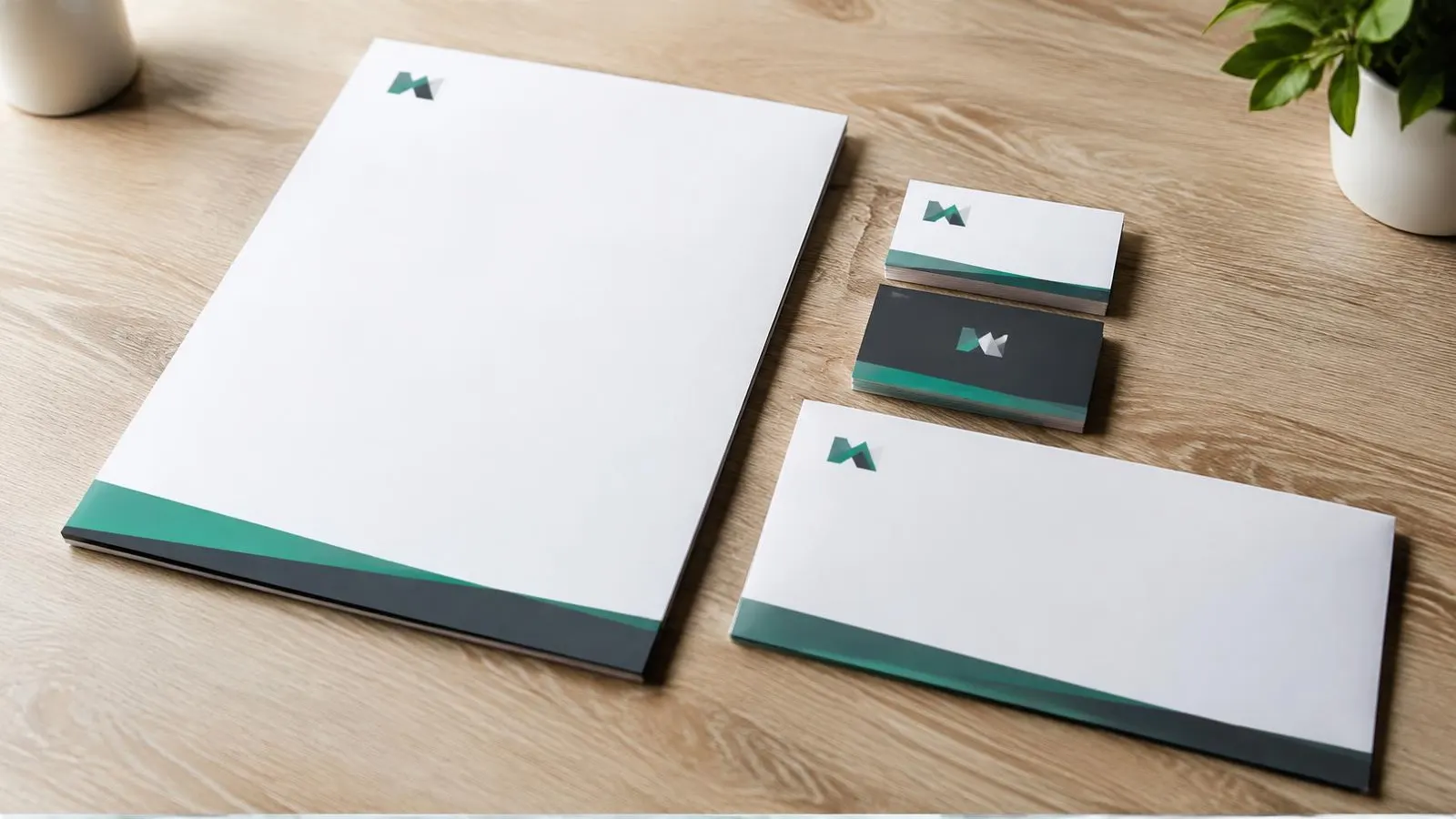
AI-generated illustration — not a completed Shree Print Centre project.
Quick answer
letterhead and envelope branding are not alternatives, since you need both, and the goal is to make them match. Standardise your logo, colours, fonts, contact details and paper quality across the letterhead, the envelope and your business cards, and decide each once so every future print order follows the same rules.
Get My Free QuoteWhen a client opens an envelope and unfolds a letter, they judge your business in seconds. If the envelope uses one logo colour and the letterhead another, or the address differs between the two, the mismatch quietly says "unorganised". Letterheads and envelopes are not rivals: they are two halves of the same impression. Here is how each one works and how to make them agree.
What Does a Letterhead Do?
A letterhead is your business's printed paper for letters, quotations and formal documents. It carries your logo, name and contact details, and often a registration or tax number where your business needs one. It is usually A4, which is 210 by 297 mm. For background, see this overview of the letterhead.
Best practice: keep the design light. Leave generous white space for the letter itself, and place heavy elements such as a large logo or a coloured band at the top or bottom edge.
What Does a Branded Envelope Do?
An envelope is the first thing a recipient sees, before they read anything. Branding it with your logo and return address makes the mail look professional, builds recognition and helps a reply find its way back. Common sizes follow the international standard: DL (110 by 220 mm) holds an A4 sheet folded in three, C5 (162 by 229 mm) holds an A5 sheet or an A4 folded in half, and C4 (229 by 324 mm) holds an unfolded A4.
Best practice: print a simple logo and return address on the flap side or the top-left corner, and check that the design still looks right once the envelope is folded and sealed.
Letterhead vs Envelope: What Each One Needs
| Element | Letterhead | Envelope |
|---|---|---|
| Main job | Carry the message and formal details | Create the first impression and return the mail |
| Typical size | A4 (210 by 297 mm) | DL, C5 or C4 depending on contents |
| Logo | Yes, top or bottom of the page | Yes, small and clean |
| Contact details | Full address, phone, email, web | Return address, sometimes phone |
| Legal details | Registration or tax numbers if required | Usually not needed |
| Print area | Must leave room for text and printing from office printers | Must clear the seal, window and postage areas |
| Paper | Smooth enough for printing and signing | Strong enough to protect contents |
Eight Things to Keep Consistent Across Your Stationery
- Logo version and size. Use the same logo file everywhere.
- Brand colours. Specify exact colour values so they print the same each time.
- Fonts. Choose one or two fonts and use them on everything.
- Address and phone format. Write them identically on every item.
- Paper feel. A letterhead and its envelope should feel like they belong together. Our GSM guide for visiting cards explains how paper weight changes the impression, and letterheads often sit in a lighter range than cards.
- Finish. Decide whether you want a plain, matte or coated feel. See matte vs glossy business cards.
- Layout margins. Keep logo and contact blocks in the same relative position across items.
- Digital versions. Keep an editable letterhead template so emails, PDFs and printed copies match.
Build the Whole Set Together
The cheapest time to make stationery match is when you design and order it together. Ordering a letterhead today and an envelope next year from a different source is how colours drift. A set usually includes letterheads, envelopes in your most-used size, business cards and sometimes compliment slips or folders. Our business card cost guide shows what affects price so you can plan the set budget.
A Quick Pre-Print Checklist
- Same logo file and colours on every item
- Contact details identical and proofread
- Bleed and safe margins set for each size
- Colour mode set for print
- Space left for text, seal, window and postage
- A printed proof checked before the full run
For the principles behind print-ready files, see our guide to brochure printing mistakes, since the same file rules apply to stationery. For the wider idea of how a business presents itself consistently, see this overview of corporate identity.
Get a Matching Stationery Set
Tell us which items you need and send your logo, and we will help you set up letterheads, envelopes and cards that match. Explore our Letterhead Printing, Envelope Printing and Visiting Card Printing services, or call us for a quote.
Frequently Asked Questions
Do I need both a letterhead and a branded envelope?
Yes, if you send formal letters or documents by post, since the letterhead carries the message and the envelope makes the first impression, and they should match.
What size should a business letterhead be?
Most business letterheads are A4, which is 210 by 297 mm, because that suits standard office printers and filing.
Which envelope size fits an A4 letter?
A DL envelope fits an A4 sheet folded in three, a C5 fits an A4 folded in half, and a C4 fits an A4 flat.
What should go on a company letterhead?
Include your logo, business name, address, phone, email and website, and any registration or tax number your business is required to show.
How do I keep my stationery colours consistent?
Use the same logo file and exact brand colour values on every item, and order the set together or from the same printer with an approved proof.