Die-Cut vs Kiss-Cut Stickers: What's the Difference?
Shree Print Centre production team · Last updated
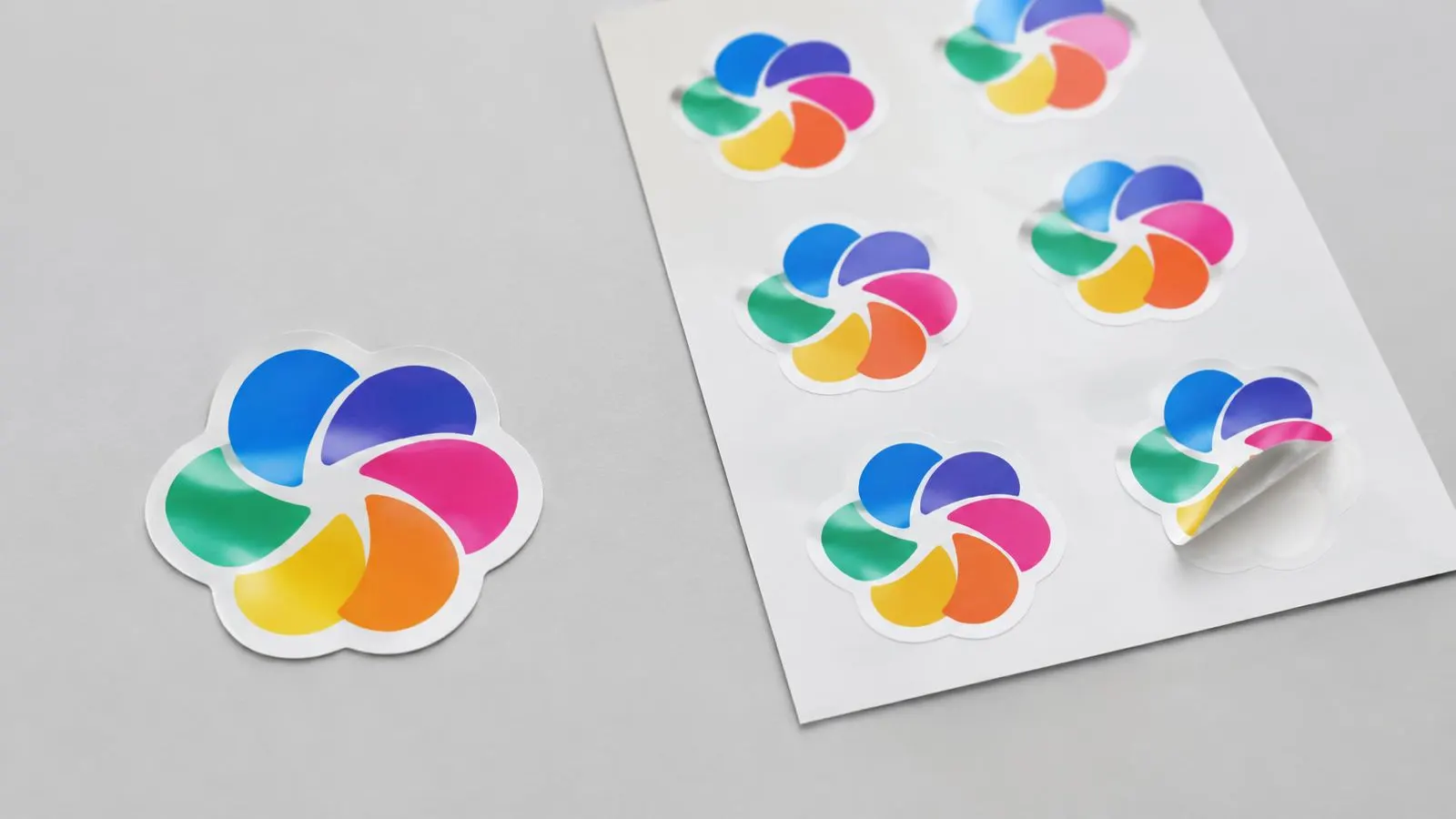
AI-generated illustration — not a completed Shree Print Centre project.
Quick answer
a die-cut sticker is cut through both the sticker and its backing paper, so each one is a separate piece in the exact shape of your design. A kiss-cut sticker is cut only through the sticker layer, leaving the backing intact, so the sticker peels off a sheet or backing card. Die-cut suits premium, single-shape stickers, while kiss-cut suits sheets, packaging and easy peeling.
Get My Free QuoteTwo stickers can have the same artwork and still behave very differently, depending on how they are cut. Die-cut and kiss-cut are the two cuts you will meet most often when ordering custom stickers. Knowing the difference helps you pick the right one for packaging, giveaways or branding, and avoids a surprise when the order arrives.
What Is a Die-Cut Sticker?
A die-cut sticker is cut all the way through, both the printed vinyl and the paper backing, along the outline of your design. The result is an individual sticker in a custom shape, such as a logo outline or a circle, with a backing that matches the shape.
Best for: premium giveaways, brand stickers, laptop and bottle stickers and anything where the shaped outline is part of the look.
What Is a Kiss-Cut Sticker?
A kiss-cut sticker is cut only through the sticker material, "kissing" the backing without cutting it. The backing stays whole, usually as a rectangular sheet or card, and each sticker peels off cleanly. A single sheet can hold several designs. For the general idea of how stickers are made, see this overview of the sticker.
Best for: sticker sheets, product packaging seals, labels, multi-design packs and anything that is easier to hand out or apply from a sheet.
Die-Cut vs Kiss-Cut: Key Differences at a Glance
| Factor | Die-Cut | Kiss-Cut |
|---|---|---|
| Cut depth | Through sticker and backing | Through the sticker layer only |
| Backing | Matches the sticker shape | Stays a whole sheet or card |
| How it is supplied | Separate individual pieces | On a sheet or backing card |
| Multiple designs together | Usually sold separately | Easy, many designs on one sheet |
| Peeling and handling | Backing peels away as part of the cut shape | Sticker lifts cleanly from the backing |
| Look and feel | Premium, shaped, stand-alone | Practical, neat, sheet-style |
| Best for | Branding, giveaways, single-shape stickers | Packaging, sticker packs, labels |
| Typical cost drivers | Shape complexity, size, quantity, material | Sheet size, number of designs, quantity, material |
How to Choose
- Think about how people will receive it. A single shaped sticker handed to a customer feels different from a sheet of small stickers.
- Think about application. Kiss-cut is easier when stickers are applied one at a time from a sheet, for example sealing a packaging box.
- Think about the look. If the outline of the shape matters, choose die-cut.
- Think about the number of designs. Several designs belong on a kiss-cut sheet.
- Think about the surface. The adhesive type and the vinyl or PVC material also matter, so ask which suits where the sticker will be used. Many stickers use a pressure-sensitive adhesive, described in this overview of pressure-sensitive adhesive. Our guide to PVC vs vinyl stickers explains the material difference.
Design Tips for Clean Cuts
- Set a clear cut line. Provide a separate line showing where the cut should go.
- Add bleed. Extend the artwork slightly beyond the cut line, because cutting is never perfectly identical every time.
- Keep important content inside a safe margin. Do not place text or logos right against the edge.
- Avoid very thin shapes and sharp inner points. Fine details can tear or peel unevenly.
- Consider a white border. A small border around the artwork hides tiny cutting variations and helps the sticker stand out.
- Use high-resolution artwork and print-ready files. The same file rules apply as for any print job, covered in our brochure printing mistakes guide.
- Keep branding consistent. Match your logo and colours to your stationery, as explained in our stationery branding guide.
Questions to Ask Before You Order
- Which material is used, and is it suited to indoor or outdoor use?
- Is the adhesive permanent or removable?
- Is lamination offered, such as matte or gloss?
- What is the minimum order quantity?
- Will I see a proof of the cut line before printing?
Get Your Stickers Cut Right
Tell us the shape, size, quantity and where the stickers will be used, and we will recommend die-cut or kiss-cut and the right material. Explore our Sticker Printing, PVC Sticker Printing, Vinyl Sticker Printing and Label Printing services, or call us for a quote.
Frequently Asked Questions
What is the difference between die-cut and kiss-cut stickers?
A die-cut sticker is cut through both the sticker and its backing, while a kiss-cut sticker is cut only through the sticker layer so the backing stays whole.
Which is better for packaging, die-cut or kiss-cut?
Kiss-cut is usually better for packaging because the stickers peel easily from a sheet and are simple to apply one at a time.
Are die-cut stickers more expensive than kiss-cut stickers?
Cost depends on shape complexity, size and quantity, and either type can cost more depending on the design, so compare quotes for your exact artwork.
Can I put multiple designs on one kiss-cut sheet?
Yes, kiss-cut makes it easy to place several different designs on one sheet, which is useful for sticker packs.
What is bleed on a sticker?
Bleed is extra artwork that extends beyond the cut line so that small shifts during cutting do not leave a white edge.